
I used to dread running tests.
Every code change meant waiting 45 minutes for the test suite to run to completion. Half the tests would fail randomly. I'd re-run them. They'd pass. I'd push the code and pray nothing broke in production.
Sound familiar?
After a decade of building applications, I discovered the problem wasn't the tests themselves. It was how I was organizing them. The Test Pyramid changed everything for me, and I want to share what actually worked.
The Problem Nobody Talks About
Here's what I see in most codebases. Teams have "great test coverage" but can't ship features. Why? Because their test suite is an inverted pyramid.
Most teams have this (The Ice Cream Cone Anti-Pattern):
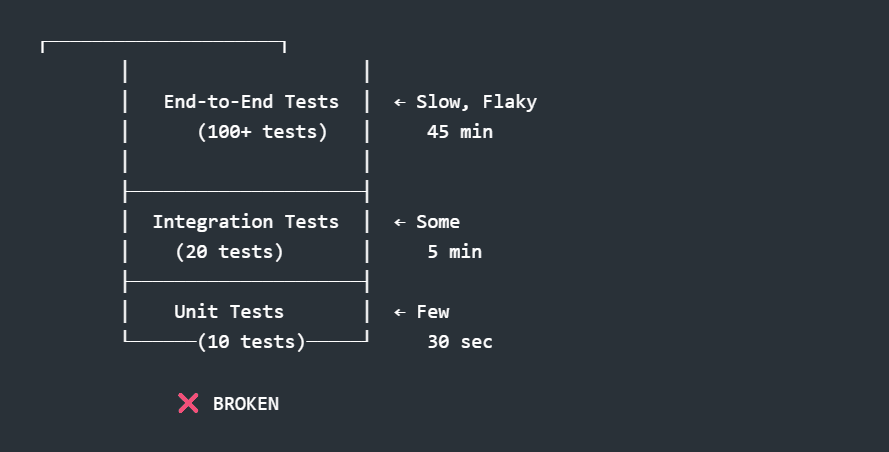
They have hundreds of slow end-to-end tests that click through the browser. These tests fail when the network hiccups. They fail when an animation takes 301ms instead of 300ms. They fail for reasons nobody can explain.
The team stops trusting the tests. They re-run failures until everything goes green. Testing becomes a checkbox exercise instead of a safety net.
I was stuck in this cycle for years. Then I learned about the Test Pyramid, and everything changed.
What Is the Test Pyramid? (The Real Version)
Forget the academic definitions. Here's what the Test Pyramid actually means for your application.
You should have this (The Test Pyramid):
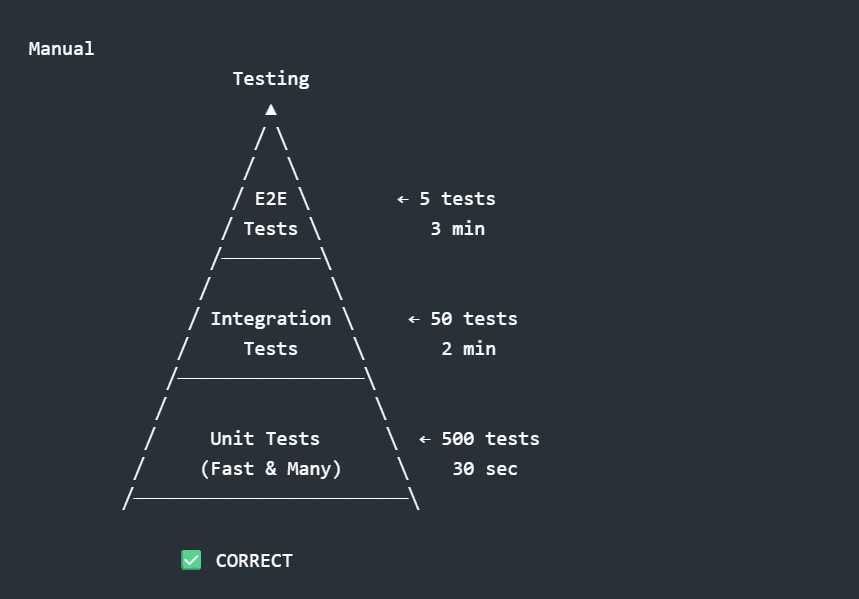
The bottom layer is unit tests. These are fast tests that check individual methods or classes. They run in milliseconds. You write lots of them because they're cheap and reliable. When a unit test fails, you know exactly what broke.
The middle layer is integration tests. These verify that your code works with databases, APIs, and external services. They take a few seconds to run. You write some of them to ensure your application's pieces connect properly.
The top layer is end-to-end tests. These are full user journey tests that click through your actual application. They take minutes to complete. You write very few of them, only for your most critical flows.
The pyramid's shape is the key insight. Wide at the bottom with many fast tests. Narrow at the top with few slow tests.
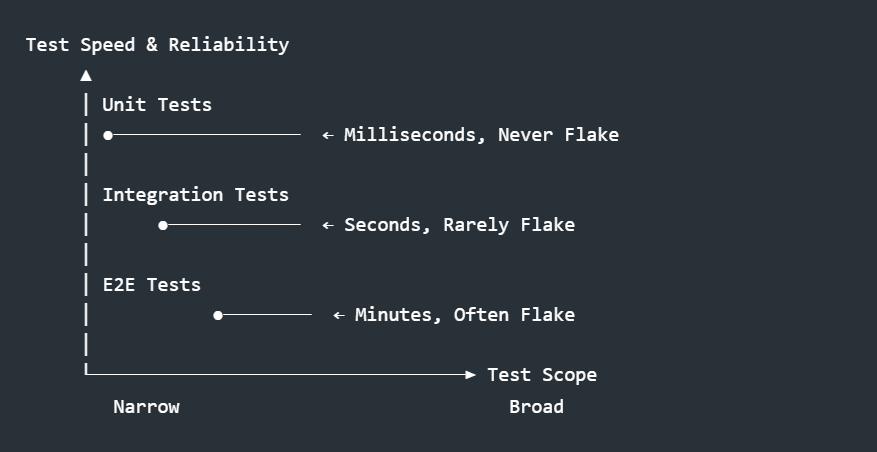
The Speed vs Coverage Trade-off
Here's the relationship most developers miss:
Why This Actually Matters (Three Hard Truths)
Let me share three painful lessons I learned before discovering this approach.
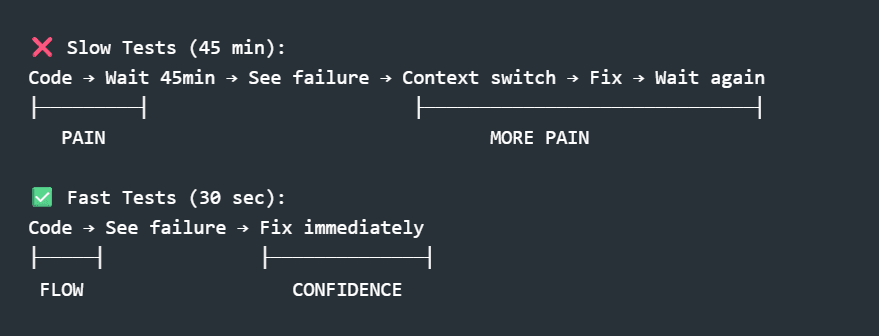
Fast tests change how you work. When your tests run in milliseconds, you run them constantly. After every small change. Before every commit. This creates a tight feedback loop that catches bugs immediately. When tests take 45 minutes, you run them once before lunch and hope for the best. That's not testing, that's gambling.
The Feedback Loop Difference:
Flaky tests destroy team morale. I've seen developers completely ignore test failures because they've learned the tests are unreliable. A test fails, they re-run it, it passes, they move on. When this happens enough times, your entire test suite becomes worthless. Fast, focused unit tests almost never flake. Slow, complex end-to-end tests flake constantly.
Debugging slow tests wastes your best developers. When an end-to-end test fails, someone has to dig through logs, screenshots, and video recordings to figure out what happened. I've watched senior developers spend entire afternoons debugging test failures that had nothing to do with the actual code. When a unit test fails, the problem is usually obvious within 30 seconds.
How I Rebuilt My Test Suite (The 3-Week Plan)
Here's exactly what I did to transform a 45-minute test suite into a 5-minute one. You can follow the same process.
My 3-Week Transformation:
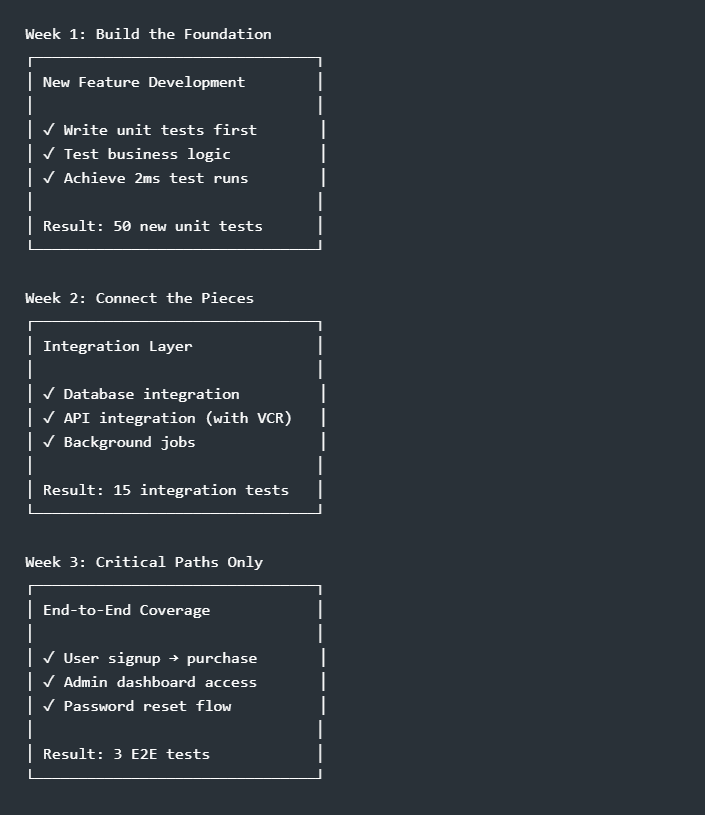
Week 1: Start Writing Unit Tests for Everything New
I stopped writing end-to-end tests for new features. Instead, I focused on unit tests that covered the business logic.
For example, when building a shipping cost calculator, I didn't spin up a browser and fill out forms. I wrote simple, fast tests that checked the math directly.
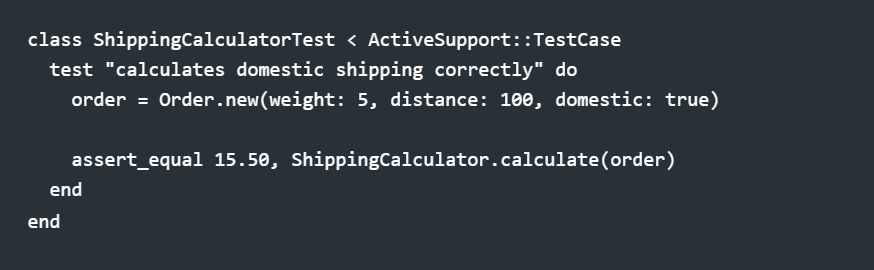
This test runs in 2 milliseconds. It never flakes. When it fails, I know the shipping calculation is broken.
The Anatomy of a Good Unit Test:
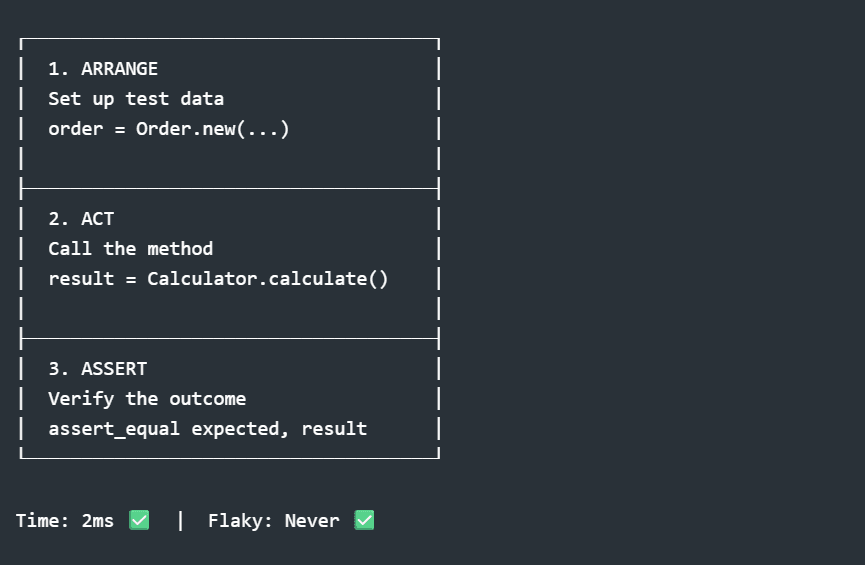
The pattern I followed was simple. Arrange your test data. Act by calling the method. Assert the result. Every test followed this structure, making them easy to read and maintain.
Week 2: Add Integration Tests for External Dependencies
Unit tests are great for logic, but your application also needs to interact with databases and APIs. That's where integration tests come in.
What Integration Tests Actually Test:
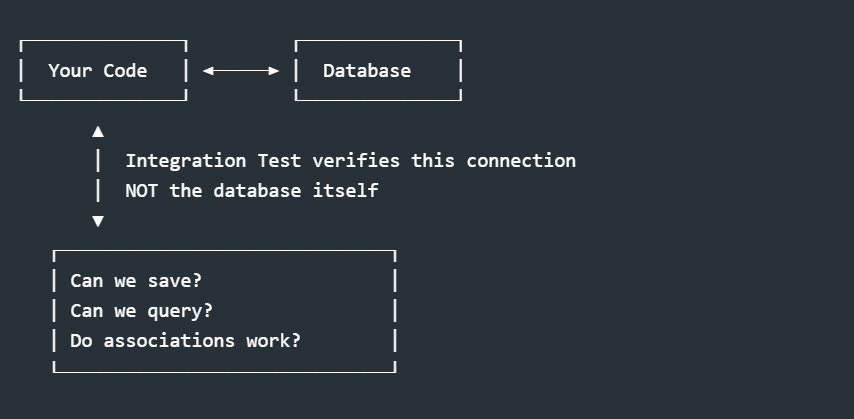
I wrote integration tests that verified my code could save to the database, fetch from APIs, and process background jobs. But I kept them focused. Each test verified one integration point.
When testing the database, I didn't test the database adaptor itself. Framework already does that. I tested that my specific queries and associations worked correctly.
When testing an external API, I used tools like VCR to record real HTTP requests and responses. This made the tests run faster while still verifying that I could handle the actual API responses.
The key was keeping these tests narrow. Don't test everything in one integration test. Test the connection works, then go back to unit tests for the logic.
Week 3: Identify Critical Flows and Write Minimal End-to-End Tests
This was the hardest part. I had to be ruthless about what deserved an end-to-end test.
E2E Test Decision Tree:
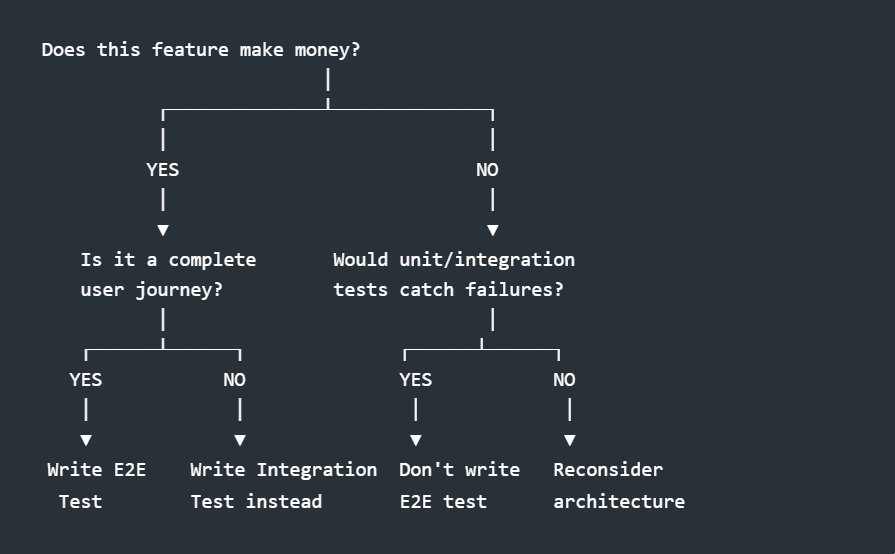
For an e-commerce application, I wrote exactly one end-to-end test. The purchase flow. If a user can search for a product, add it to their cart, and complete checkout, the application is working.
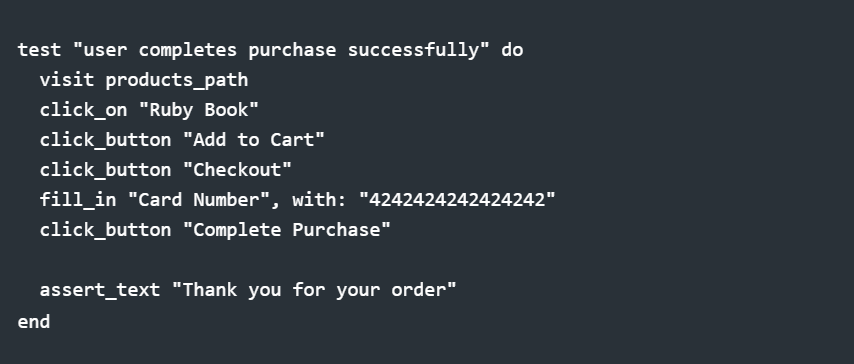
One test. One critical path. If this passes, money is flowing.
Everything else? Covered by faster tests lower in the pyramid.
The Mistakes I Made (So You Don't Have To)
Let me save you some pain by sharing what didn't work.
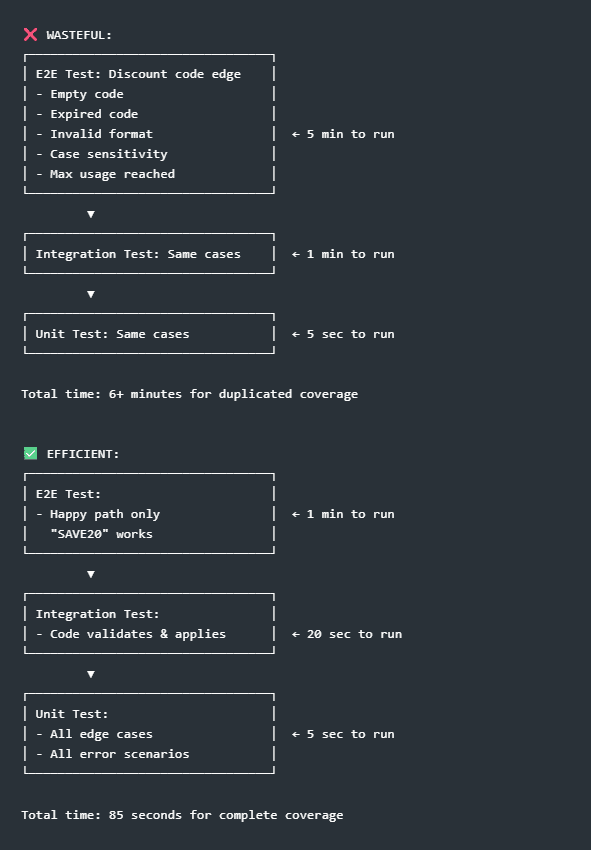
Common Anti-Pattern: Test Duplication
I tested the implementation instead of the behavior. Early on, I wrote tests that checked if specific methods were called. This made refactoring impossible. Every small change broke dozens of tests. Now I test outcomes, not implementation. Does the user get a welcome email? Great. I don't care which class sends it.
I duplicated tests across layers. I had unit tests that checked all the edge cases for a feature. Then I had integration tests that checked the same edge cases. Then, end-to-end tests were run to check them again. This was a waste. Now my unit tests cover edge cases, and higher-level tests only verify that the pieces connect.
**I tested the framework. **I wrote tests that verified the framework could save records to the database. The framework is already tested. I don't need to test it again. Now I only test my code, not the framework.
The Results (After 3 Months)
The transformation was dramatic.
Before vs After:
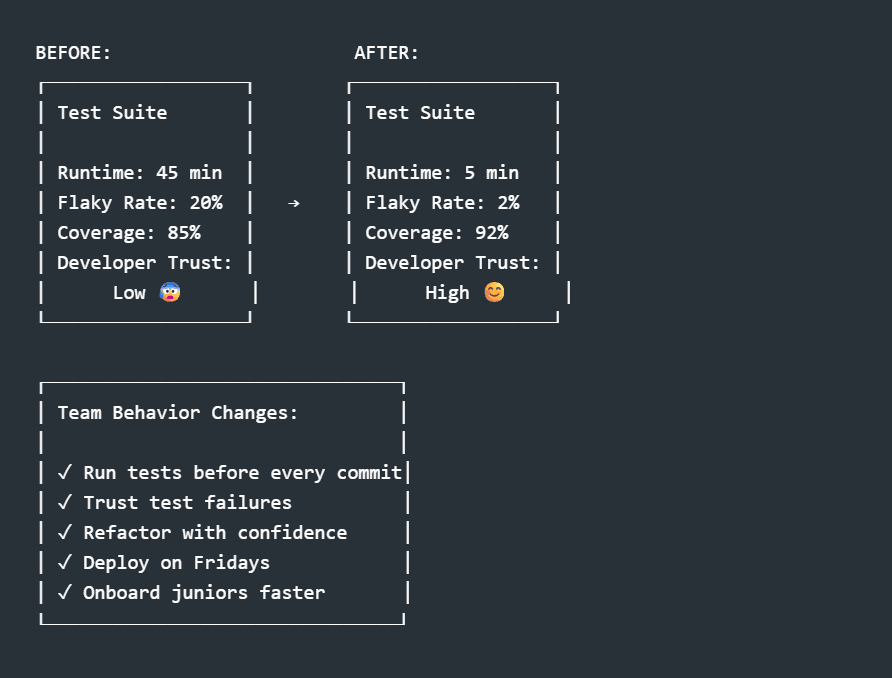
Test suite runtime dropped from 45 minutes to 5 minutes. Flaky test failures went from 20% of runs to less than 2%. Developers started trusting the tests again. When something failed, they investigated rather than rerun.
But the biggest change was cultural. People started running tests constantly. Before every commit. After every small change. The fast feedback loop made everyone more confident and productive.
Refactoring became safe instead of terrifying. Need to extract a class? Run the unit tests. They pass in seconds. Need to change a database query? Run the integration tests. They pass in 30 seconds. Ship with confidence.
Start Small, Build Gradually
Don't try to rewrite your entire test suite this weekend. That's a recipe for burnout.
Your First Week Action Plan:
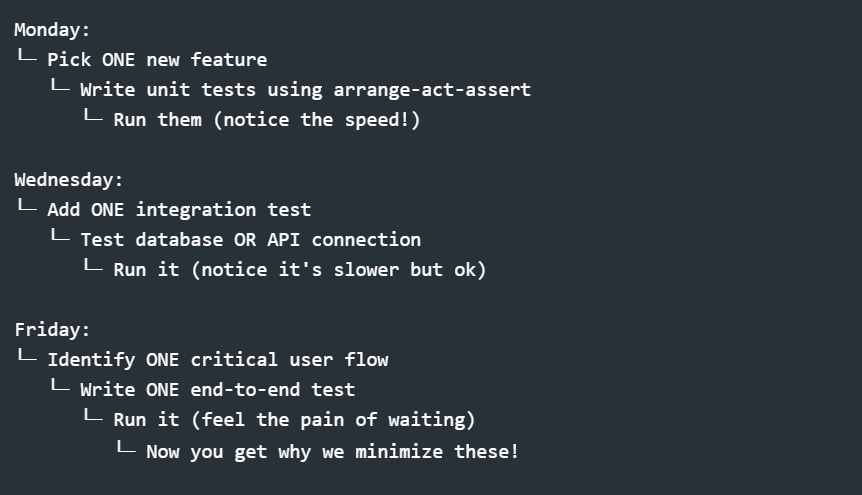
Here's what I recommend. Pick one new feature you're building this week. Write unit tests for it using the arrange-act-assert pattern. Run them constantly while you develop. Notice how fast they are.
Next week, add one integration test for a database interaction or API call. Run it. Notice it's slower than unit tests but still reasonable.
The week after, identify your most critical user flow. Write one end-to-end test for it. Run it. Feel the pain of waiting minutes for results. Now you understand why we minimize these tests.
Build the pyramid gradually. It took me three weeks to see real results. It took the entire team three months to adopt the pattern. That's fine. Progress beats perfection.
The Truth About Testing
After years of struggling with tests, I've learned something important. Testing isn't about coverage percentages. It's about confidence.
The Real Goal:
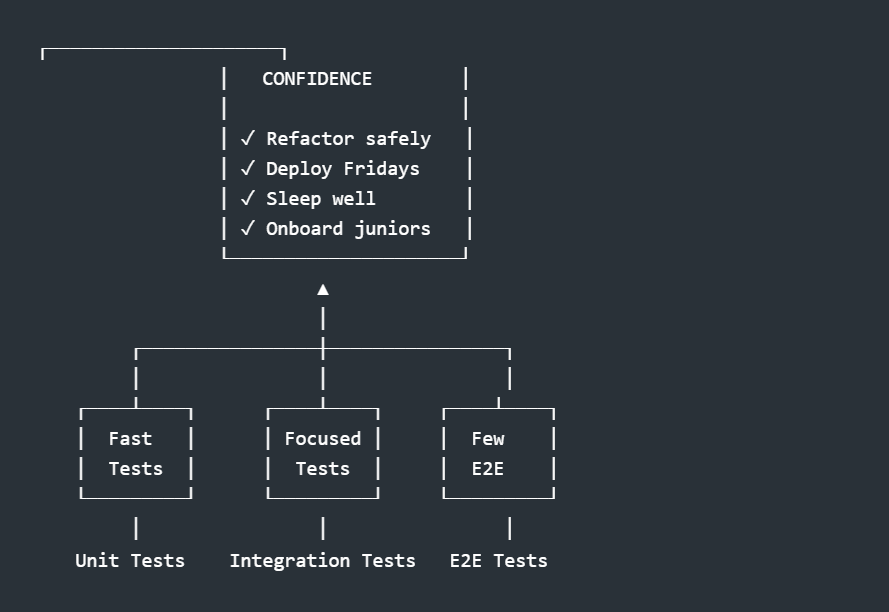
Can you refactor without fear? Can you deploy on Friday afternoon? Can you onboard new developers without worrying they'll break everything?
The Test Pyramid gives you that confidence. Not through magical techniques or complex frameworks. Through simple principles applied consistently.
Fast tests at the bottom. Slow tests at the top. A few tests that exercise everything. That's it.
Your test suite should make you faster, not slower. If it doesn't, rebuild it using the pyramid. Start this week. Your future self will thank you.